Read this first
When a crypto card is the wrong choice
A crypto card is not always the answer. If you spend mostly at home, or you do not hold crypto yet, the card in your pocket is cheaper. Two minutes here tells you which side you are on.
1. You spend mostly in your own currency, and it is not USD or EUR
Every card here charges FX on currencies other than dollars and euros. ether.fi takes 1%. KAST takes 0.5% to 1.75%. The 0% headline applies to USD and EUR only.
A 3% cashback rate with 1% FX against it leaves 2%, and an ordinary card from your own bank may already beat that with none of the setup. If your spending is groceries, transport and delivery apps at home, keep the card you have.
2. You want it for travel, and you do not already hold crypto
This is the most common mistake. To use a crypto card starting from ordinary money you have to buy the coin (trading fee), send it to the wallet (network fee), load it, and only then spend. Every step takes a cut, and the place you arrive at is worse than a low-FX travel card from a bank or from a fintech like Wise or Revolut.
Compare the total against whatever your own country offers before you start. Their fee terms change too, so check the current ones rather than trusting any comparison page, ours included.
When you already hold the coin. Then it reverses: selling, waiting for the
withdrawal to clear, and moving money through a bank all disappear.
A crypto card is not a way to get into crypto. It is
an exit for crypto you already have.
Run your own numbers →
3. You plan to keep a large balance on it
Custodial cards carry no deposit insurance. KAST's terms say plainly that the account "is not covered by insurance against losses" and that "the Company is not a bank, it is a technology company". The operating entity is registered in Anjouan, Comoros, governed by Seychelles law with arbitration in Singapore.
For what happens when one of these shuts down, look at Cypher. Cards stopped working on 7 August 2026 and the platform closed on 6 September 2026. Several comparison articles still have it on their recommended list.
Keep spending money on it, not savings. The self-custody cards (ether.fi, bleap, Gnosis Pay) leave the assets in your own wallet, which removes most of this risk and adds a setup step.
4. It would be your only way to pay
Issuance changes without warning. RedotPay let a Korean applicant through signup and KYC, took $10 for a virtual card, and then refused activation. A VPN did not help, which means the block is on the identity document rather than the connection. Cards issued earlier still work; new ones do not.
Being abroad with this as your only card is a bad position.
Carry it as a backup and keep a primary card.
Check your country →
Tax is not something we can answer
We are not tax advisers. What you should know before starting is that spending from a crypto balance can count as disposing of the asset in many places, and the bookkeeping gets harder as the number of transactions grows. Talk to an accountant once the amounts matter.
When it does fit
If you got this far and one of these is you, the card is a real gain.
- You hold crypto with nowhere to spend it. The selling step disappears
- You send money home, or to a student abroad. Minutes instead of days
- You live abroad or move often. You can pay from day one with no local account
- You pay for foreign subscriptions or ad spend. It works where domestic cards get declined
Two cards we applied for ourselves
We completed signup, KYC and virtual card issuance on both. Issuance is decided by the identity document you hold, not by where you are sitting, so a VPN will not change the answer. Check your country before you pay for anything.
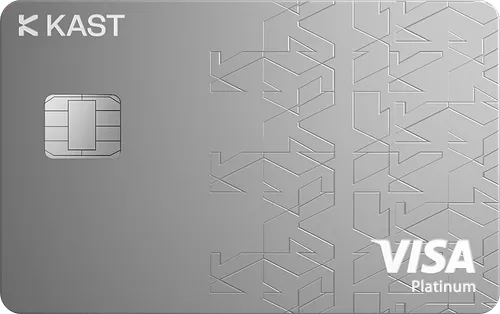
- Two virtual cards free
- US account and routing number, plus an EU IBAN
- 1.5% back, 0% FX on USD
- Virtual card free, physical $50
- Self-custody: the balance stays in your wallet
- 3% back, 0% FX on USD and EUR
- Spending outside USD and EUR carries an FX fee. KAST charges 0.5% to 1.75%, ether.fi charges 1%. Only dollars and euros are 0%. Subtract that from the cashback to see what you actually keep.
- Cashback is capped monthly. ether.fi pays 3% on the first $2,000 a month, then 1%, then 0.5%. KAST Standard pays 1.5% up to $2,000.
- The physical card costs money. The virtual card is free; plastic is $50 at ether.fi and $40 shipping at KAST. Use the virtual one first, then order.
- You can still be refused. We verified issuance ourselves where we say so, but issuer policy changes without notice. That is exactly how RedotPay closed in Korea.